Pearl of Kazakh culture

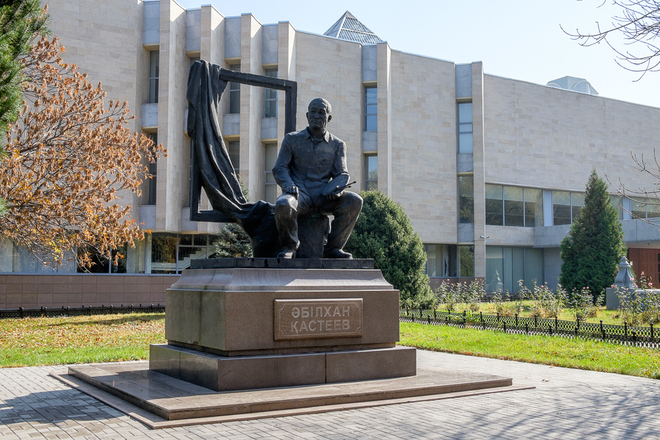
Almaty is the “southern capital” of our immense Republic. Citizens of Kazakhstan love Almaty not only for the beauty of this metropolis, but also for its cultural life. Many seek to see the sights of our city. One of these cultural and educational attractions is State Museum of Art. A. Kasteev of the Republic of Kazakhstan.
For me personally, as a native resident of Almaty, the museum plays a huge role in my life. I grew up next to this museum and as a result I began to join the art precisely there as I studied at an art school at this museum. The museum eventually became a part of me like any other Almaty citizen.

Speaking a little about the history of the museum is worth mentioning the date of its organization – 1976. In 1935, the exhibition under the title “15th anniversary of the formation of the Kazakh Autonomy” was organized by the Kazakh State Art Gallery. The gallery conducted work on the collection of works by Kazakh, Russian and foreign artists.

Abylkhan Kasteev State Museum of Art. The history of its creation.

Compared with Western collections, the stocks of our museum are small, but they are charming and valuable in their own way as they reflect the history of our people. The museum has a large collection of fine and applied arts in Kazakhstan. A large collection of felt, pile carpets, leather and wood products. The museum is the largest collection of paintings, sculptures and graphics of Kazakh masters.

Image result for музей кастеева
Hall representing works of artists 30s-40s
By Marina Karpykova

In the museum fund them. A. Kasteev has about 23,000 exhibits. Many people mistakenly think that there is nothing here except permanent expositions. In fact, the museum is a whole research center with workshops in it, series of lectures and numerous interactive classes.

Excursions in the museum are held in Kazakh, Russian and English. The museum has two types of excursions: sightseeing – only for adults, and the hall – for schoolchildren and for all comers. Sightseeing – 5000 tenge for 1.5 hours. A detailed tour of one hall – 2500 tenge for schoolchildren and students, for adults – 3000. Admission to the museum for adults costs 500 tenge, for schoolchildren and students enrolled in art schools – 200 tenge.

I always ask my friends and acquaintances the reason behind not visiting the museum? Reply was that they had never visited the museum due to the fact that it was simply not interesting enough for visiting and that it lacks interactivity. But if you search carefully (or not so carefully), then you can find many interesting events taking place in our museum.

Related image
Photo by Vladimir Proskurin

So I boldly declare my love for this museum. It is necessary to teach yourself and your children to be culturally educated, especially to the culture of our homeland. A lot of interesting things can be found here, just visit the Museum of Kasteev. Have a great time in our city!
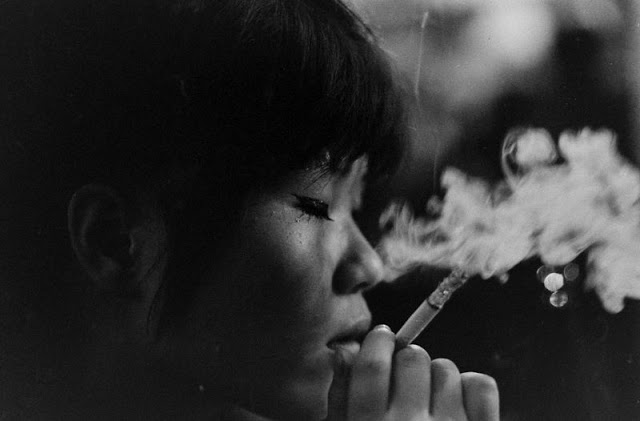
Girl-bosses in Japanese history

Credits to the owner

Since ancient times, the life and social status of women in Japan have been regulated by unshakable traditions and unwritten laws: the education and training of a woman were entirely focused on her family purpose. From an early age, Japanese girls were accustomed to the idea of self-sacrifice and unselfish service to the father, husband, son.

Despite the radical changes in the 20th century, this philosophy remains very strong in modern Japan. This is manifested not only in the tradition according to which, when married, but many women also cease their labor activity, devoting themselves to family and children.

In the 1970s, the Japanese housewife stereotype began to break down. The girls began to rebel, form groups and engage in disorderly conduct, sniff glue, lead a free sex life. In school, allowed themselves daring antics.

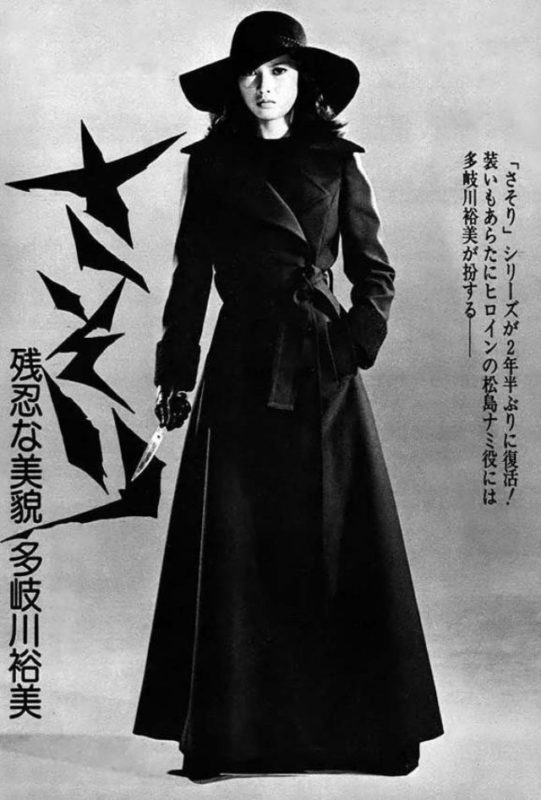
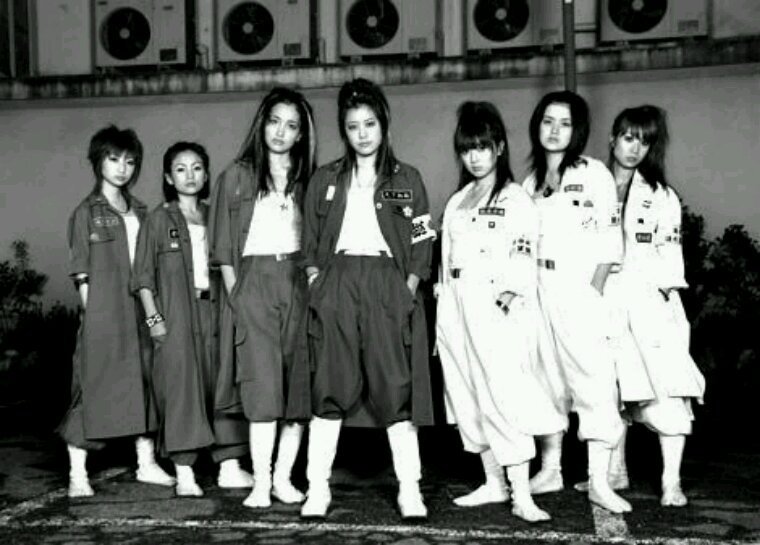
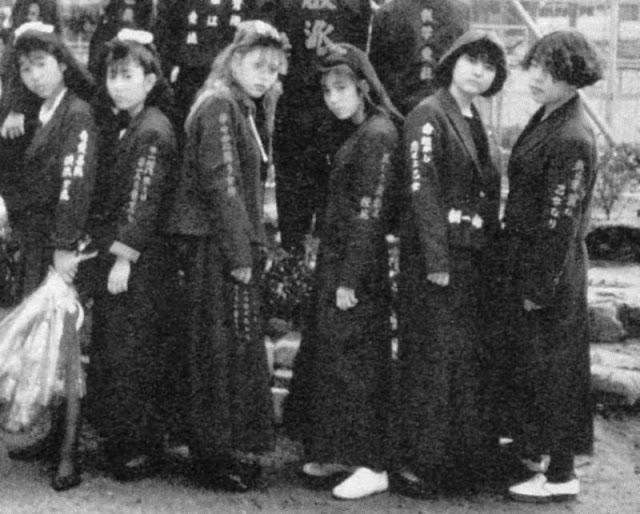
Sukeban was a real, lively subculture of rebel girls, who preferred the school uniform so as not to look like boys in leather, and were called upon to prove that girlhood and strength are not mutually exclusive.

The term “sukeban” means a bandit girl. Literally translated as “girl boss”. In the 1980s, Japanese police received a list of signs that could be used to calculate these potentially aggressive adolescents. Their school uniform had distinctive details: bright socks instead of white, rolled up sleeves, tattoos, a maxi skirt with a shortened blouse, and an embroidered grouping emblem.

Translated from Japanese, “suke” is a woman, and “ban” means “boss”. They were known for forming female gangs in which they robbed and attacked people. For the first time these groups appeared in the 1960s, and the “gang” was followed by gangs known as “Bancho”, which were joined by young men who dreamed of getting into the yakuza – the Japanese mafia.

By the 70s, the number of gangs had increased, and the sukeban girls became famous for their cruelty. The size of the groups varied from small (a group of Tokyo thieves in stores, about 80 participants) to simply huge (Women’s Delight Alliance Kanto, which, according to rumors, consisted of about 20 thousand girls throughout East Japan). Warring groups often encountered each other in fights and battles. Sukeban could sniff glue, steal heroically in stores, engage in prostitution and violence, but if they are still arrested, the police would treat them more loyal than ordinary criminals.

Each such organization had its own rather strict charter, for its violation threatened with beatings or, for example, burning with a cigarette. It was forbidden to disrespect the elders in the group, flirt with someone else’s boyfriend, friendship with a girl from another group. Even the mafia-yakuza perceived them very positively, without missing an opportunity to express approval.

However, the girls fought more for the idea. Long skirts can be seen as a reaction against the sexual revolution of the 60s, means of protection, with the help of which girls could show that their existence is not determined by the desires of men of onlookers. Fast forward to the 90s, and this trend has completely abolished itself: by that time, the “bad girl” had to wear a hundred kilograms of makeup, and the skirt hem should be as short as possible so that everyone could appreciate your indescribable sexual attractiveness.