Pearl of Kazakh culture

Almaty is the “southern capital” of our immense Republic. Citizens of Kazakhstan love Almaty not only for the beauty of this metropolis, but also for its cultural life. Many seek to see the sights of our city. One of these cultural and educational attractions is State Museum of Art. A. Kasteev of the Republic of Kazakhstan.
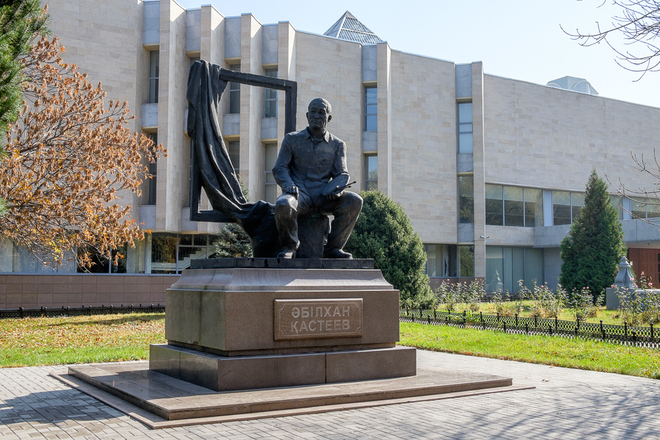
For me personally, as a native resident of Almaty, the museum plays a huge role in my life. I grew up next to this museum and as a result I began to join the art precisely there as I studied at an art school at this museum. The museum eventually became a part of me like any other Almaty citizen.

Speaking a little about the history of the museum is worth mentioning the date of its organization – 1976. In 1935, the exhibition under the title “15th anniversary of the formation of the Kazakh Autonomy” was organized by the Kazakh State Art Gallery. The gallery conducted work on the collection of works by Kazakh, Russian and foreign artists.

Abylkhan Kasteev State Museum of Art. The history of its creation.

Compared with Western collections, the stocks of our museum are small, but they are charming and valuable in their own way as they reflect the history of our people. The museum has a large collection of fine and applied arts in Kazakhstan. A large collection of felt, pile carpets, leather and wood products. The museum is the largest collection of paintings, sculptures and graphics of Kazakh masters.

Image result for музей кастеева
Hall representing works of artists 30s-40s
By Marina Karpykova

In the museum fund them. A. Kasteev has about 23,000 exhibits. Many people mistakenly think that there is nothing here except permanent expositions. In fact, the museum is a whole research center with workshops in it, series of lectures and numerous interactive classes.

Excursions in the museum are held in Kazakh, Russian and English. The museum has two types of excursions: sightseeing – only for adults, and the hall – for schoolchildren and for all comers. Sightseeing – 5000 tenge for 1.5 hours. A detailed tour of one hall – 2500 tenge for schoolchildren and students, for adults – 3000. Admission to the museum for adults costs 500 tenge, for schoolchildren and students enrolled in art schools – 200 tenge.

I always ask my friends and acquaintances the reason behind not visiting the museum? Reply was that they had never visited the museum due to the fact that it was simply not interesting enough for visiting and that it lacks interactivity. But if you search carefully (or not so carefully), then you can find many interesting events taking place in our museum.

Related image
Photo by Vladimir Proskurin

So I boldly declare my love for this museum. It is necessary to teach yourself and your children to be culturally educated, especially to the culture of our homeland. A lot of interesting things can be found here, just visit the Museum of Kasteev. Have a great time in our city!
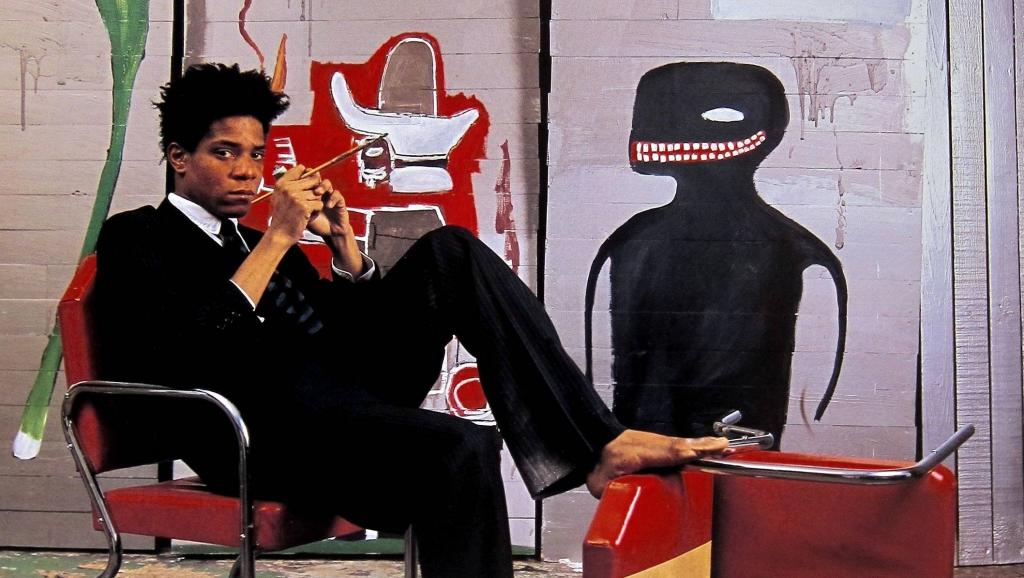
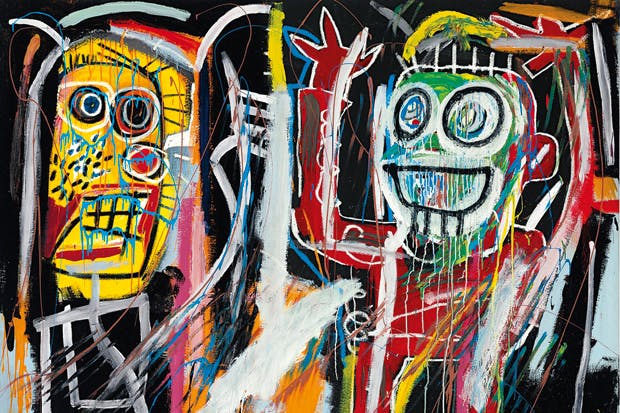
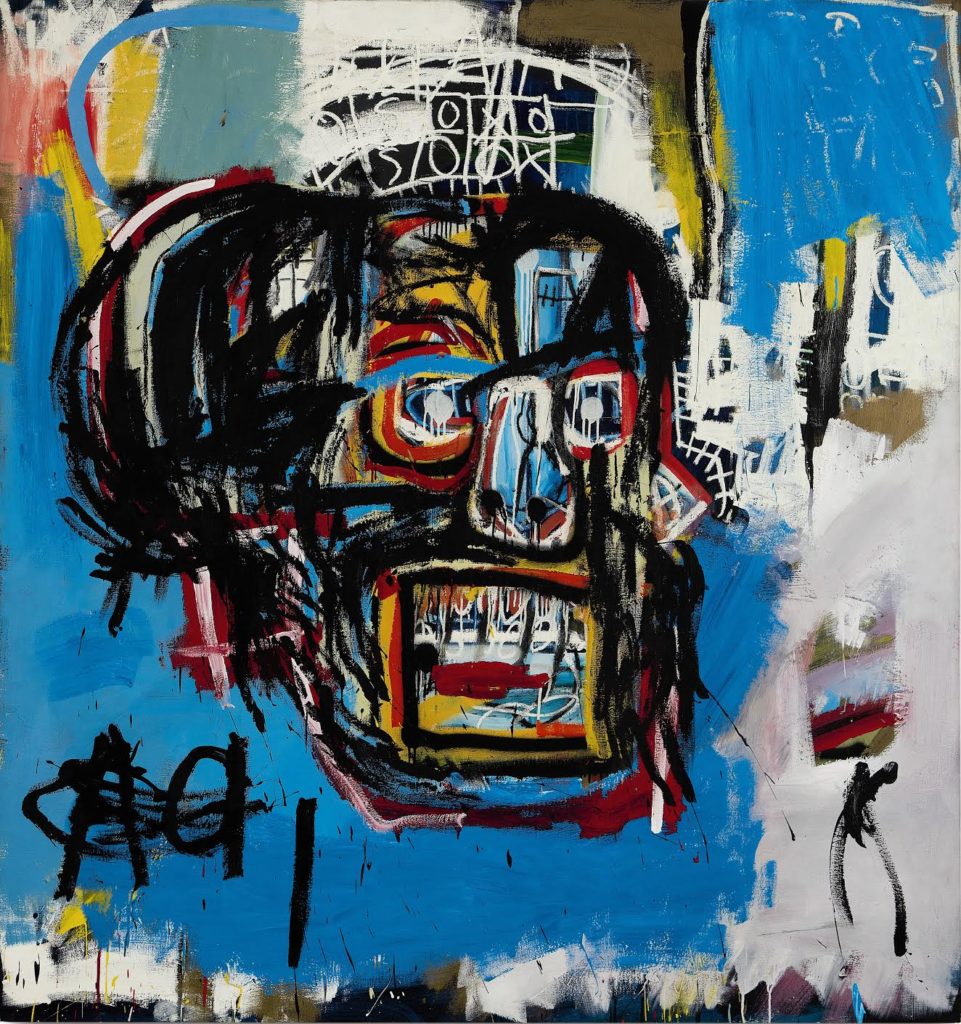
Street art. Jean-Michel Basquiat

Jean-Michel Basquiat is a graffiti artist and neo-expressionist, a representative of the Manhattan bohemia. Today Basquiat is considered one of the most famous graffiti artists in the world. His works are sold at prestigious auctions for millions of dollars. For example, his painting Blurred Heads was sold in May 2013 at an auction in New York for $48,800,000.

“Dustheads”, 1982, by Jean-Michel Basquiat

Basquiat was born on December 22, 1960 in Brooklyn, New York. His father Gerard was from Haiti (Haitian motifs often appear in the works of the artist), his mother Matilda is from Puerto Rico. She strongly supported all the early creative endeavors of her son, contributed to his comprehensive training. Jean-Michel, in addition to English, also spoke Spanish and French, which can be traced to his works.

When the boy was hit by a car at the age of 7, his mother presented him with the reference book “Gray’s Anatomy”, so that he could understand why he was hurt. Later in the various works of Basquiat we can find references to this textbook, numerous images of human skulls. After leaving home at the age of 17, Basquiat and a friend began to paint their first graffiti, signing them with SAMO or SAMO shit (from English “same old shit” – “the same old shit”).

Jean Michel-Basquiat, Untitled (1982). Courtesy of Sotheby’s New York.

Basquiat often painted the walls not far from the Manhattan galleries or the bohemian clubs of the Soho district in order to attract the attention of “official white art”. His works were multivalued, had several semantic levels. At that time, no one did this. One day, in 1979, when he saw in the window of a New York cafe Andy Warhol, Basquiat entered and offered him to buy a postcard. Warhol liked the postcard, but the acquaintance of young people did not continue.

The relationship of artists is very influenced by the work of each other. Basquiat showed Warhol examples of his work, and Warhol shook the drawings of the young artist. It was Andy who introduced him to the very heart of America’s bohemian artistic environment. The relationship of artists continued until the death of Warhol.

Modern art critics call the work of Basquiat not graffiti, but a full-fledged wall painting. The museums are not yet resolved to represent the artistic processes of New York in the 1980s with the works of Basquiat, delicately explaining their fear of the discrepancy between the paintings of this artist and the status of museum works. A similar dual attitude to the work of Jean-Michel Basquiat was present during his lifetime.

Jean-Michel Basquiat can be attributed to the infamous Club 27. Like the other members of this conditional club, the guy was generously endowed with talents and died of a drug overdose at the age of 27. Fans of Basquiat see in his later works a premonition of death. The last work of Basquiat was “The Rider of Death”.

History of the August and “The Roses of Heliogabalus”

The successor of Nero and Caligula, the 23rd Roman Emperor Elagabalus was spoiled since childhood. His name has become synonymous with the perversion of character, cruelty and blind adherence to lust. Strictly speaking, he was spoiled, not yet born – because he was conceived, brought up and grew up in a social paradigm that distorts his contemporaries.

Elagabalus was a worthy son of his era, from childhood he was taught that he can do anything. He wore women’s robes, was publicly exposed, was defiantly bisexual, slept with male slaves. Proudly declared that even the corrupt women did not have as many lovers as he. At the same time, by the time he was 19 years old (G.J. 203-222 AD), he had already been married five times. He openly considered honest people to be lost, and deceit and promiscuity in connections was a virtue.

The highest chic of that time was considered to sleep with a slave and then kill him. He also had a peculiar behavioral code – indicative of the fact that he was rather orderly. For example, Elagabalus daily gave something to his friends, all the time supposedly for some evil deed – he left good gifts without a gift. He made strange lotteries where he could win ten camels and ten pounds of gold — or ten flies and ten pounds of lead. At dinner, the “golden boy” ate camels’ heels, peacocks and nightingale tongues and crests cut from live roosters.

Elagabalus was so absorbed in pleasures that his mother, Julia Soaemias, and her grandmother, Julia Meza, were responsible for state affairs. Young emperor was not embarrassed in any way – he allowed them to be present in the Senate and to vote, which was previously not accepted. Quite bizarrely, a kind of “democracy” was woven into the postulates and behavioral norms of Elagabalus – he gave Senate posts, regardless of age or social origin of the candidates.

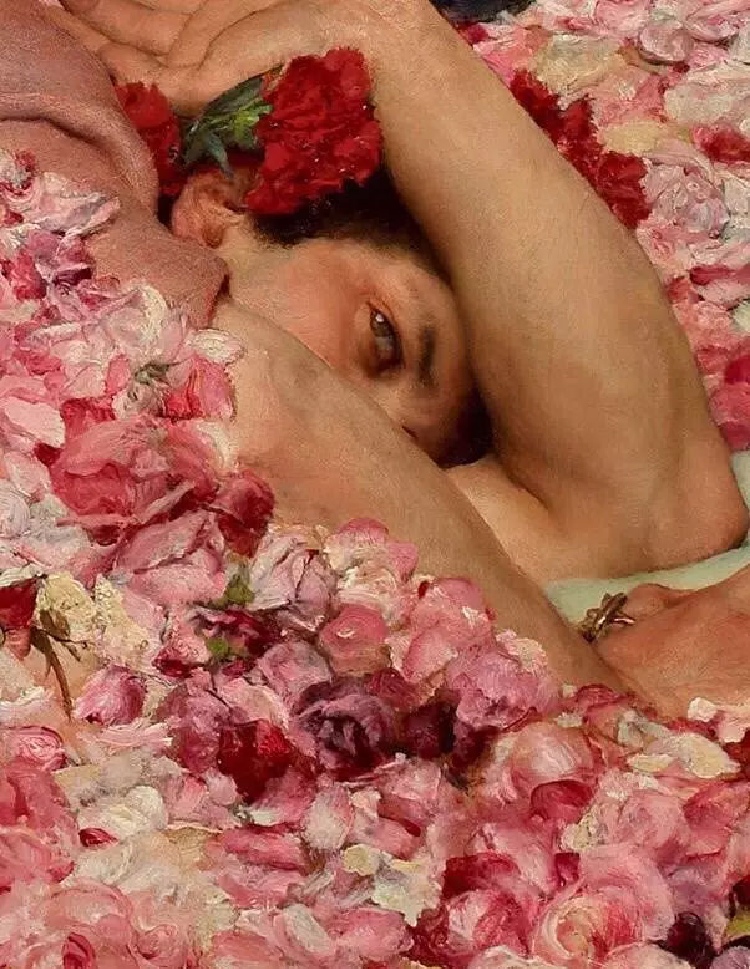
The Roses of Heliogabalus- Sir Lawrence Alma-Tadema (1888)

“The Roses of Heliogabalus” – painting by English artist Lawrence Alma-Tadema, written in 1888. According to some, this canvas is filled with the spirit of human suffering, while according to others it is a fake historical-literary. Despite the opinions of historians that this is just a fake legend, this piece of art won’t leave you indifferent.

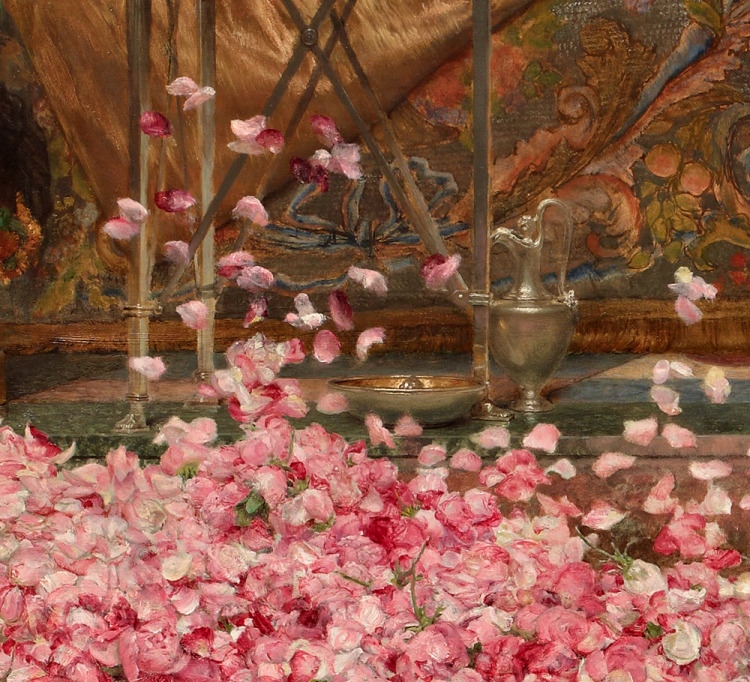
The product in pastel tones with the predominant pink is written about death, and, to put it more clearly, about multi-death, group murder. For the basis, Alma-Tadema took the plot, from a historical point of view, dubious – “The History of August.” It described how during the feast the Roman emperor Elagabalus ordered the killing of his enemy guests, sprinkling them with roses from the ceiling. From the smell of roses, guests had to suffocate.

The main character can be seen in the background in a golden diadem, reclining in a golden mantle (or robe) on pillows next to his mother Julia. Farther visible is the statue of Dionysus – her Tadema was painted from the original kept in the Vatican Museum. Some critics perceive the sculpture as a symbol of ridicule, evil irony over the plot depicted – the Greek god looks at all this “chaos” and laughs happily (however, this is only the personal opinion of critics).

The emperor with undisguised curiosity observes the creation of his hands – the slow and painful death of guests from roses falling from an awning suspended from the ceiling and then released by the executioner into a free and deadly fall. The boy is the only male in the company of ladies. According to legend, his goal was to poison the guests with the smell of roses – and it was the pink mass that was the first to strike the eye and occupy the prevailing area of the canvas.

At first, the guests were surprised at the sudden pink waterfall, then they were delighted, but the roses continued and continued to pour in, and this cruel joke gradually began to bother and then scared. And then they all died. At the same time, the organizers of the massacre are located on a kind of “captain’s bridge”, observant bed, full of gloating. They seem to be watching a fascinating performance, which they themselves orchestrated, they are full of pride.

According to historians, the artist painted a picture in the winter, and for four months each week, he ordered fresh roses in the French Riviera, controlling the liveliness of each petal. With that, one of the tasks of the master was to bring into the canvas the spirit of rotting and decomposition – like roses, like the people who died from them.